If you’re a woman scrolling through Instagram…
You’ve probably wondered why those abs seem so effortless. Flat stomach. Defined lines. Always visible.
In reality, it’s anything but.

Abs Aren’t Just “Earned in the Gym”
Body Fat Percentage Matters (A Lot)
You can do as many ab exercises as you want, but unless your body fat is low enough to reveal the muscle underneath, those abs won’t be visible. You’re just building abs under a layer of fat.
Visible abdominal definition is primarily a function of overall body fat levels, not how many crunches you do. Fat loss happens across the entire body, not just in one specific area.
For women, this comes with an important consideration. We naturally carry more body fat than men due to hormonal and physiological differences (Wells, 2007). It’s part of normal, healthy function.
To have very defined, “shredded” abs, body fat often needs to be reduced to levels that can be difficult, and sometimes unsustainable, especially for women.
Take bodybuilders as an example. One thing many people don’t realize is that they don’t stay that lean year-round. That level of definition is typically reserved for competition season. Because the truth is that being that lean all the time isn’t realistic or healthy for most people.

Genetics And Muscle Shape
Not all abs look the same, and you can’t change that. The shape of your abs, how many “packs” you have, and how defined they appear are largely determined by genetics.
But genetics don’t just influence how your abs look. They also influence where your body stores fat. Research shows that fat distribution, including abdominal fat, has a significant genetic component (Bouchard, 2008).
That’s why some women naturally store more fat around the stomach, while others store more around the hips and thighs. Even at the same body fat percentage, two people can look very different.
Hormones, Stress, and Daily Fluctuations
Your body is not static and your abs won’t look the same 24/7.
Hormones like estrogen, along with stress levels and your menstrual cycle, can influence water retention, bloating, and how “flat” your stomach looks.
You might wake up looking leaner, and then feel like your abs “disappear” after eating or drinking. During PMS, you might feel bloated and think you’ve gained fat overnight (you haven’t).
The reality is that maintaining that perfectly flat, defined look all day, every day would require an unrealistic level of micromanaging your lifestyle.
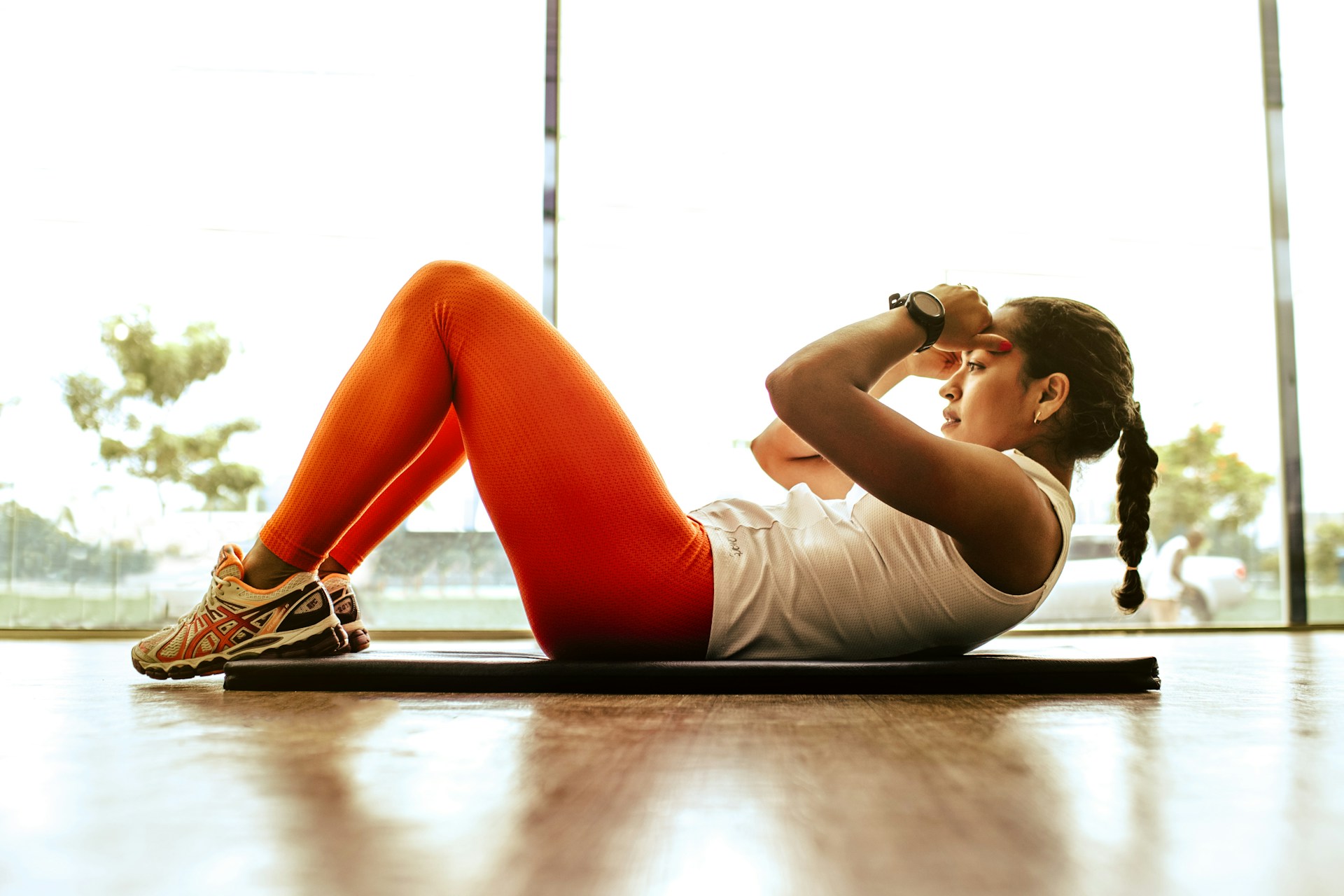
Training for Abs: The Biggest Myths
Spot Reduction is a Myth
Doing 100 crunches a day will not burn belly fat. This is one of the most well-established findings in exercise science: you cannot target fat loss in a specific area through exercise alone.
A controlled study on abdominal training found no significant reduction in abdominal fat despite targeted ab exercises (Vispute et al., 2011).
What ab exercises do is build muscle. What reveals the muscle is overall fat loss, driven by nutrition and total energy balance.
Train Your Core, Not Just Your Abs
Your abs are part of a bigger system: your core.
A strong core supports your spine, improves posture, and transfers force efficiently in both daily movement and athletic performance.
Instead of focusing only on crunches, it’s more effective to train your core through movements like planks, hollow body holds, dead bugs, and anti-rotation exercises. Ironically, this approach not only improves performance, but also contributes to better-looking abs over time.
Consistency Beats Intensity
Doing random ab workouts won’t get you very far. What actually makes a difference is consistency, in training, nutrition, sleep, and lifestyle. Not a “killer ab workout” once in a while.
What You See Online vs Reality
Most “Instagram abs” are not what they look like in everyday life. They’re often taken first thing in the morning, before food or water, after a workout pump, under ideal lighting, while flexing, and sometimes even edited.
Speaking as someone who work in the gym and fitness environment, in real life, even among fit and athletic people, abs are not constantly visible. This is especially true for women, who naturally store more fat around the midsection.
The Truth About “2-Week Ab Challenges”
No. You cannot get abs in two weeks.
What you can do is create a temporary visual effect. Frequent ab training can create a muscle “pump,” and short-term changes in diet can reduce bloating. This can make your stomach look tighter for a short period of time.
But actual muscle development (the kind that shows even when you’re relaxed) takes time. And once those short-term habits stop, the effect often disappears just as quickly.

Abs ≠ Fitness (And Definitely Not Your Worth)
Abs are aesthetic. They are not a measure of strength, athletic ability, or overall fitness.
You can have visible abs and lack strength. You can also be extremely strong and not have visible abs at all. I’ve met people with shredded abs who can’t do a proper pull-up, and athletes with incredible performance who don’t have visible abs at all.
Even many high-level athletes don’t have defined abs, because their training and nutrition are focused on performance rather than appearance.
Visible abs can reflect discipline, but they don’t define capability.
The Reality Check
Visible abs are achievable for many women.
But they require consistency, time, proper nutrition, and often being leaner than what’s easy to maintain. And even then, genetics play a role.
This isn’t to tell you that you shouldn’t want abs, but to give you a clear, honest picture of what it actually takes to get abs as a woman. Because once you understand that, you can set realistic expectations and make better decisions for your body and your goals.